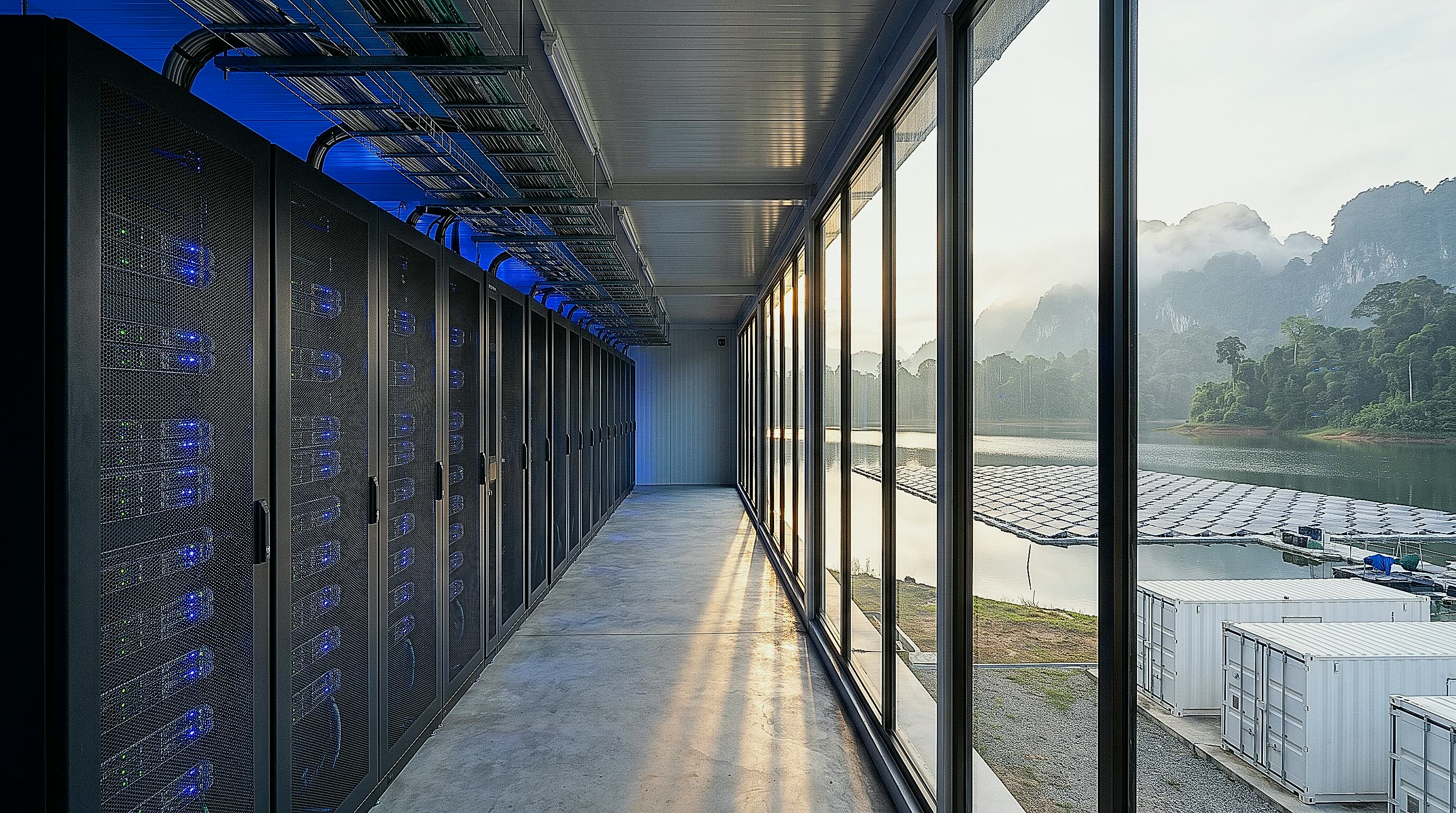
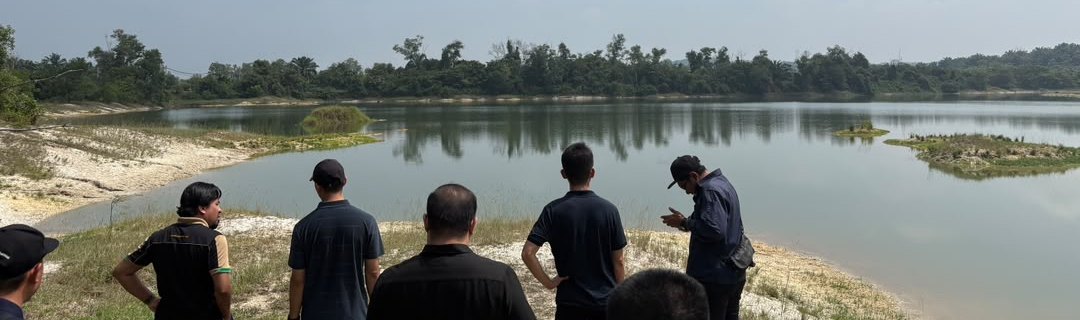
A hub is built from ports. Each port makes its own electricity, runs its own small grid and spends the power on site: solar on the water, a battery on the bank, machines beside it.
- 01GenerateSolar makes electricity on site.
- 02StoreThe battery runs the port’s grid and keeps the site alive.
- 03ComputeMachines follow the sun, using power where it is made.
- 04RefreshHardware changes; the energy asset remains.
What those machines compute is flexible by design. Proof-of-work hashing is the launch revenue bridge: it monetises the hub from the day it energises. As the hardware refreshes, the fleet can move toward AI inference, training and high-performance computing, which need firm power around the clock and are expected to grow at later refreshes.
That is the design, not indecision. The hardware changes; the ground beneath it does not. Panels last twenty-five years and the battery is planned to the site’s design life; the machines are replaced every few years. Every refresh is a fresh decision, taken with the expensive part already paid for.
Every megawatt that a digital infrastructure operator buys from a grid is a megawatt whose price someone else controls.
Volume I · Chapter 4